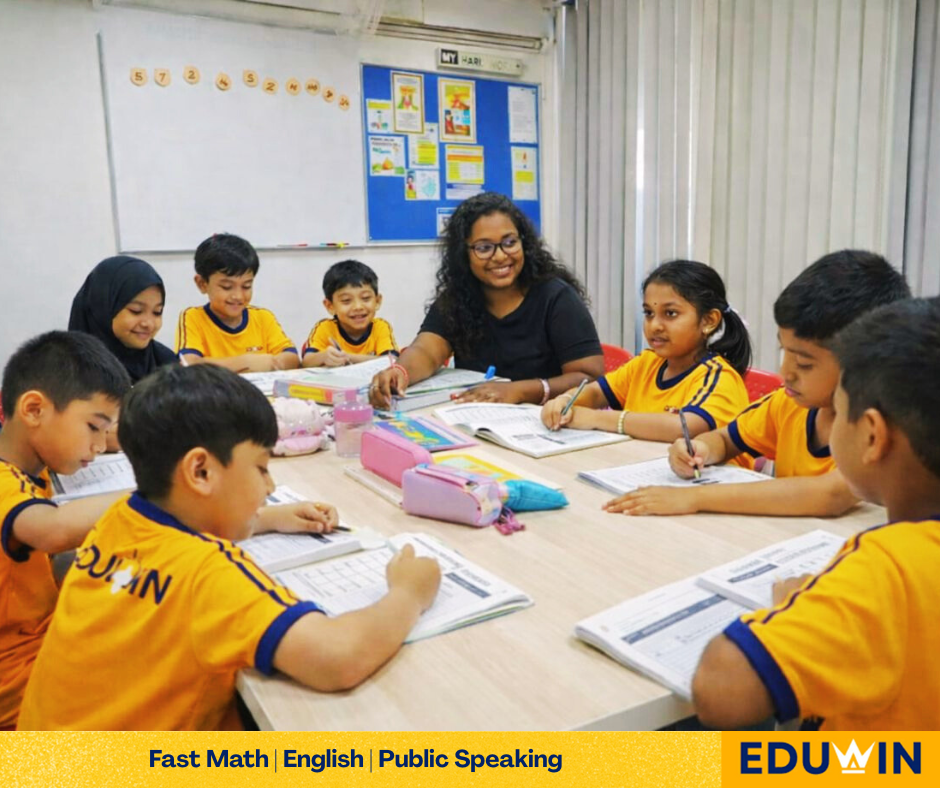
Reading opens the door to new ideas. Writing helps children express what they understand. Together, these skills form an important foundation for learning.
As children grow, English becomes more than a subject in school. It helps them understand information, communicate their thoughts and participate in different learning experiences.
However, developing strong reading and writing skills takes time. Children need opportunities to recognise words, understand sentences, build vocabulary and express their ideas in writing.
At Eduwin, English learning focuses on supporting children’s language development through structured learning and regular practice.
Why Are Reading and Writing Skills Important?
Reading and writing are closely connected. Children who develop their reading skills gain opportunities to encounter new vocabulary, sentence structures and ideas. Writing allows them to practise using that language to communicate their own thoughts.
When children read, they learn to recognise words, understand meaning and follow information in a text.
When they write, they practise spelling, constructing sentences, organising ideas and communicating information clearly.
Developing both skills gives children a stronger foundation for learning English and using the language in different situations.
How Children Develop Reading Skills
Learning to read involves more than recognising letters on a page. Children gradually develop several related skills.
1. Recognising Letters and Sounds
Children begin by learning to recognise letters and understand the sounds they represent. This foundation helps them work towards reading unfamiliar words.
2. Blending Sounds into Words
Once children become familiar with letter sounds, they practise blending those sounds together to read words. Regular practice helps them become more familiar with how written words connect to spoken language.
3. Building Vocabulary and Reading Fluency
As children encounter more words, they develop their vocabulary and become more familiar with common word patterns. Continued reading practice can help them read with greater accuracy and ease.
4. Understanding What They Read
Reading comprehension involves understanding the meaning of words, sentences and passages. Children learn to identify important information, answer questions and make connections between ideas.
Each stage builds on earlier skills, although children may progress at different rates and benefit from different levels of support.
How Children Develop Writing Skills
Writing requires children to apply their language knowledge in a different way. They must think about what they want to communicate and choose words and sentence structures to express their ideas.
1. Learning to Spell Words
Children develop spelling skills as they become more familiar with letter sounds, word patterns and frequently used words.
2. Constructing Sentences
Writing simple sentences gives children opportunities to practise word order, grammar, punctuation and the relationship between ideas.
3. Expanding Ideas
As children progress, they can work towards writing longer sentences and connecting ideas to describe experiences, explain information or tell stories.
4. Organising Written Work
More advanced writing involves arranging ideas logically, using appropriate vocabulary and reviewing work to improve clarity.
Regular writing practice helps children become more familiar with these skills over time.
How Reading Supports Better Writing
Reading provides children with examples of how language works. Through books, stories and other suitable texts, they encounter vocabulary, expressions and sentence structures that they can gradually learn to use in their own writing.
For example, a child who reads a story may learn new words to describe a character. They can then practise using those words when writing their own sentences.
Similarly, reading different types of texts exposes children to different ways of presenting information, from storytelling to factual explanations.
Encouraging children to read regularly and discuss what they have read can provide useful opportunities to strengthen both comprehension and written expression.
How Eduwin English Supports Children’s Learning
Eduwin offers English learning opportunities that include early literacy development and a Cambridge English learning pathway.
The appropriate learning focus depends on each child’s age, current ability and learning needs.
Developing early reading skills
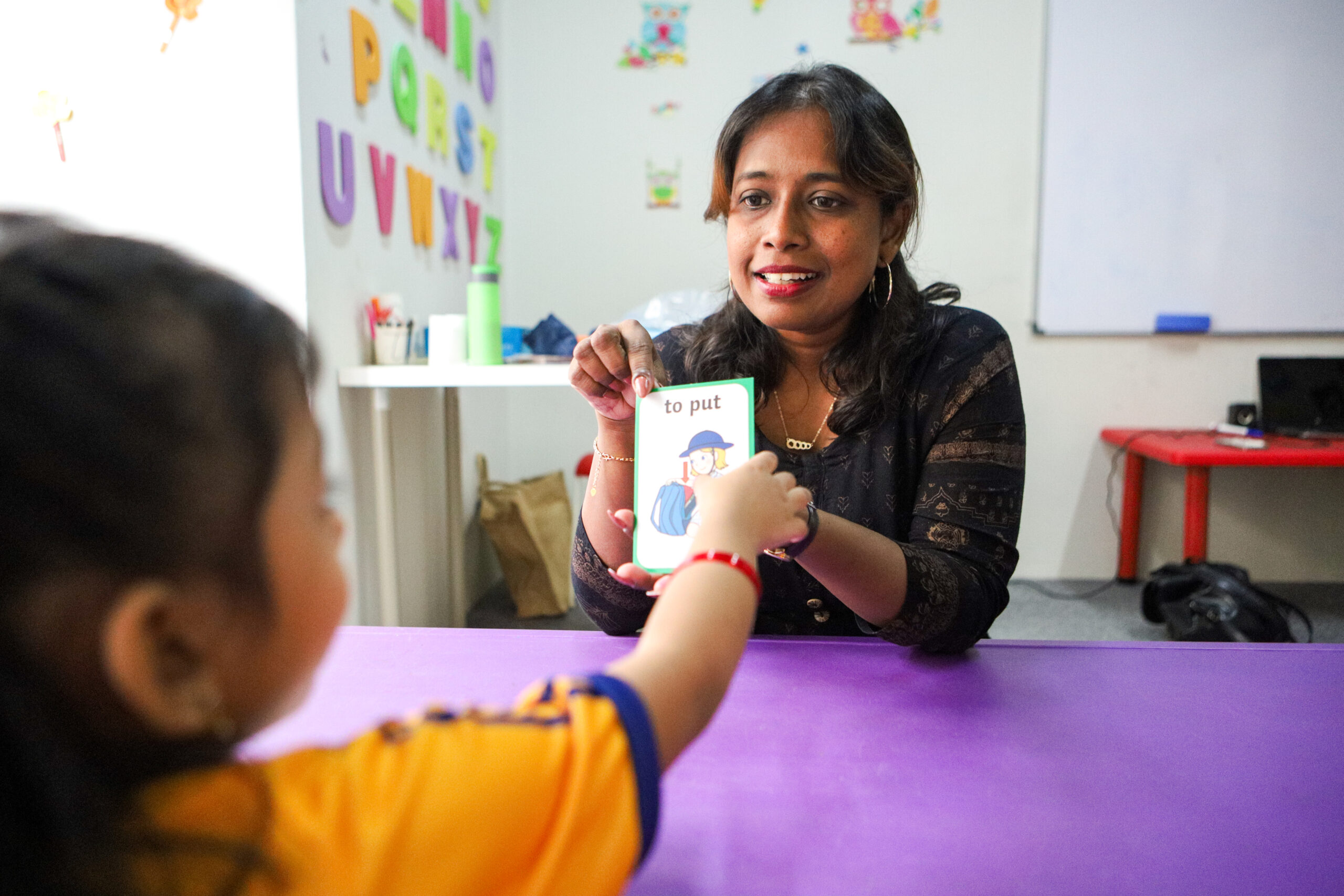
For children building their reading foundations, learning letter sounds, blending sounds and recognising words can support their progression towards reading more independently.
Strengthening reading comprehension
As children’s reading skills develop, they can work on understanding passages, identifying important information and answering questions about what they read.
Practising writing
Writing activities give children opportunities to practise spelling, construct sentences and gradually develop their ability to express ideas in written English.
Building language confidence
Through guided practice, children can become more familiar with using English in learning activities. Progress will vary according to each child’s starting point, practice and individual needs.
5 Ways Parents Can Support Reading and Writing at Home
Parents can help make English practice a natural part of everyday life.
1. Read together regularly. Choose books suited to your child’s reading level and talk about the story.
2. Ask questions about reading. Encourage your child to explain what happened and share their opinions.
3. Introduce new vocabulary. Discuss unfamiliar words and use them in everyday conversations.
4. Encourage everyday writing. Let your child write shopping lists, short messages, descriptions or a diary.
5. Celebrate progress. Recognise improvements in reading, spelling and sentence construction rather than expecting everything to be perfect.
Short, consistent activities can provide useful opportunities to practise without making learning feel overwhelming.
Finding the Right English Support for Your Child
Children may be strong in one area of English while needing more support in another. For example, a child may read confidently but struggle to write complete sentences, while another may write simple sentences but find reading comprehension difficult.
Understanding your child’s current abilities can help you identify the skills that need more attention.
If difficulties continue, speak with your child’s teacher to understand their progress and discuss suitable next steps.
Help Your Child Build Stronger English Skills with Eduwin
Reading and writing are skills that develop over time through instruction, practice and encouragement.
By helping children build their foundations and providing opportunities to use English, parents and educators can support them as they work towards becoming more capable and confident readers and writers.
Discover Eduwin’s English programmes and explore learning options that may suit your child’s needs.
Eduwin Malaysia
Fast Math | English | Public Speaking