November 20, 2026

Eduwin Opens Its Sixth Branch at Prima Saujana, Kajang

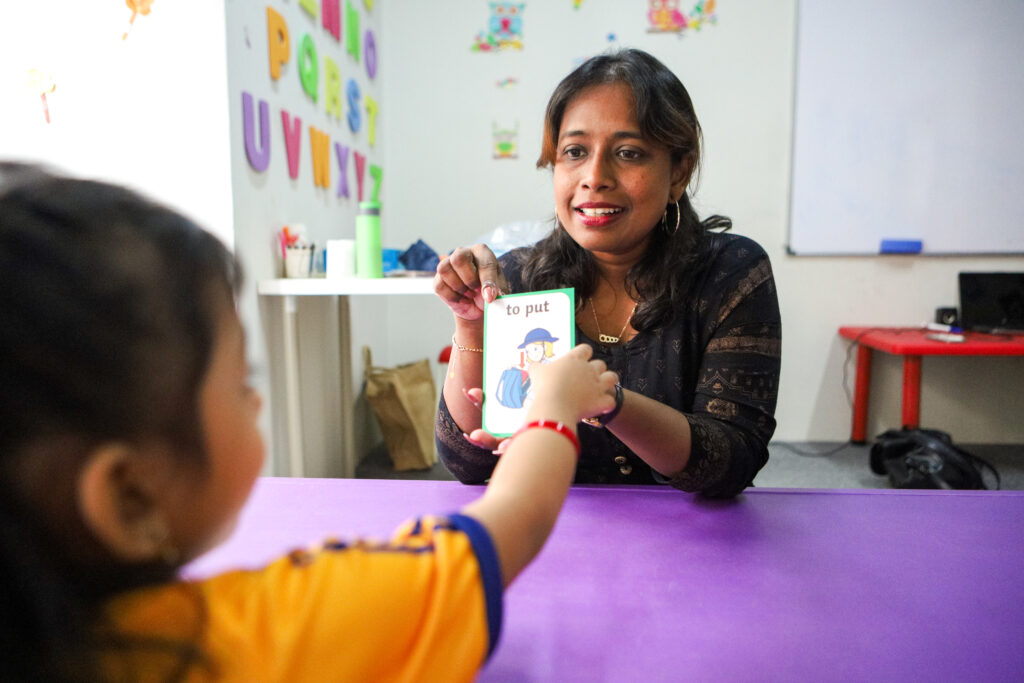
Bringing structured learning, mathematical confidence and communication skills closer to families in Selangor Eduwin Malaysia is pleased to announce the opening of its sixth branch at Prima Saujana, Kajang. The new branch marks another step in Eduwin’s commitment to making purposeful learning opportunities more accessible to children and families across Selangor. Located in the Kajang community, Eduwin Prima Saujana offers programmes that support children’s mathematical development, English literacy and confidence in communication. Each programme is designed to help children build skills progressively and apply what they learn with greater independence. A Welcoming Space for Children to Learn and Grow Eduwin aims to create a supportive learning environment where children can participate actively, practise consistently and recognise their own progress. The opening of the Prima Saujana branch brings this approach closer to local families and provides a place for parents to explore learning pathways suited to their children’s needs. Programmes at Eduwin Prima Saujana Eduwin offers different learning pathways for children at various stages of development, from early learning foundations to mathematics, English and confident communication. Mathlic: Fast Math with Public Speaking Mathlic is Eduwin’s signature programme, combining Fast Math with public speaking. Its mathematics learning journey progresses through Finger Math, Abacus and Mental Math, giving children structured opportunities to strengthen calculation skills and become more confident working with numbers. Public speaking is integrated into the Mathlic experience to help students practise expressing their ideas, organising their thoughts and presenting themselves in front of others. The combination supports both mathematical ability and the confidence to communicate what they know. BrainyTot: Early Learning from Age Four BrainyTot is designed for children aged four and above, supporting their early learning and development. It provides a starting point for young learners to build foundational skills and develop positive learning habits as they prepare for the next stages of their educational journey. Eduwin English: From Literacy Foundations to Cambridge English Eduwin English offers two pathways to support children’s English development. The English Reading and Writing Foundation programme helps children build essential literacy skills, including the foundations needed to read and write with greater confidence. For students following the Cambridge English pathway, learning includes Cambridge English preparation alongside public speaking. This gives children opportunities to develop their English proficiency while practising how to express ideas clearly and speak with confidence. Learning Beyond the Classroom Across its programmes, Eduwin aims to help children develop skills that are useful both inside and outside the classroom. With structured practice, guidance and opportunities to participate, students can work towards stronger foundations, greater confidence and pride in their progress. Growing with the Kajang Community The opening of a new branch is more than an expansion to another location. It is an opportunity to welcome new families, support children’s learning journeys and build lasting relationships within the community. Eduwin looks forward to welcoming parents and students to its Prima Saujana, Kajang branch and helping more children discover their potential through meaningful learning experiences. Discover Eduwin Interested in finding a suitable programme for your child? Contact the Eduwin Prima Saujana team to enquire about programme options, class schedules and enrolment. EDUWIN MALAYSIA Mathlic (Fast Math + Public Speaking)  |  BrainyTot  |  English Reading & Writing  |  Cambridge English + Public Speaking

Eduwin Opens Its Sixth Branch at Prima Saujana, Kajang Read More »
Eduwin Mastermind 2025: Celebrating Young Talent in Fast Math and Public Speaking

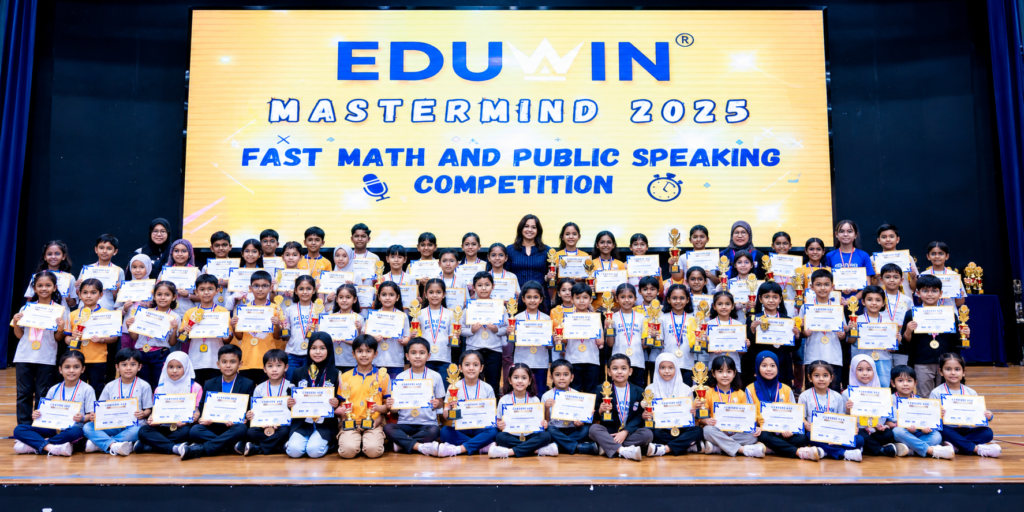
Inspiring Young Minds to Think Faster and Speak with Confidence Every child deserves an opportunity to discover their potential, challenge themselves and celebrate their progress. Eduwin Mastermind 2025 brought this belief to life through a competition dedicated to Fast Math and Public Speaking. Held on 8 November 2025 at Asia Pacific School, Subang, the event brought together students aged 5 to 17 from Eduwin branches across Malaysia, accompanied by their parents and teachers. Organised by Eduwin Malaysia, the competition provided a platform for young learners to demonstrate their mathematical skills, present their ideas and experience the excitement of participating in a competitive learning environment. For Eduwin, Mastermind is more than a competition. It reflects our commitment to helping children build skills, develop confidence and embrace opportunities to grow. Two Key Skills, One Learning Journey Eduwin Mastermind 2025 featured two main competition areas: Fast Math and Public Speaking. Fast Math: Putting Mathematical Skills to the Test The Fast Math competition challenged students across four categories: Challenge 1, Challenge 2, Mental Arithmetic and Vedic Math. These categories gave students an opportunity to demonstrate their mathematical abilities in a competitive setting. Preparing for a competition also allows children to practise concentration, work towards goals and become more comfortable applying what they have learned. Public Speaking: Giving Young Voices a Platform Public Speaking featured individual competitions for younger and older students, as well as a group presentation category. Students took to the stage to share their ideas and present their topics to an audience. The photographs from the event capture children speaking at the microphone, using presentation materials and standing alongside their teammates. These experiences give children opportunities to practise expressing their ideas, organising their thoughts and communicating in front of others. Celebrating the Eduwin Mastermind 2025 Winners Congratulations to all the students recognised in the official Eduwin Mastermind 2025 winners’ list. Their achievements deserve to be celebrated, and we are proud to share the results of each competition category. Fast Math — Challenge 1 Champion: Ahmad Yusuf Zulqarnain 2nd Place: Rhakkshyaa Ish Waran 3rd Place: Dakshayani Ramkumar 4th Place: Devassena Ramkumar 5th Place: Amni Yusra Binti Khalid Fast Math — Challenge 2 Champion: Afifa Binti Khairul Afif 2nd Place: Wan Muhammad Isa 3rd Place: Shashmitha A/P Ragunath 4th Place: Lina Imanina Bt Mohammad Hafidz 5th Place: Aroshan A/L Kalidesan Fast Math — Mental Arithmetic Champion: Aghilann Thilip Kumar 2nd Place: Muhammad Hylmi Hfiy 3rd Place: Abu Ammar Bin Abudzar 4th Place: Tamil Rithesh A/L Tamil Arasan 5th Place: Areana Gizelle Salvin Fast Math — Vedic Math Champion: Raef Elyas Bin Mohamad Hisham 2nd Place: Yap Yansey 3rd Place: Jaisitartha Nair A/L Shasshi Kunjunie 4th Place: Deveshwar Vijayann Suresh 5th Place: Yashvassin Jay Jayaseelan Public Speaking — Champ (7 Years and Below) Champion: Jaswinthan Chandra Mogan 2nd Place: Pirravinthan Mugunthan 3rd Place: Jhoshnna Tilak Raman Public Speaking — Stage Master (8 Years and Above) Champion: Azriel Zimraan Termizi 2nd Place: Nawraa Aisyah Khaleela 3rd Place: Nurul Airis Arissa Public Speaking — Group Presentation Champion — Group 1 Aishah Binti Ahmad Shuib Nurhajar Izzara Binti Md Shahril Redza Irfan Harith Bin Mohd Hazrin Yap Jia Er 2nd Place — Group 4 Raisha Binti Saiful Shahan Muhammad Harith Rayyan Bin Mohd Khairul Shahrizat Muhammad Azfar Bin Md Kamaruddin 3rd Place — Group 2 Nurain Nazneen Binti Farhan Farid Sarah Binti Mohammad Yusoff Muhammad Ibrahim Bin Benny Jaswet Muhd Fateh Danny Bin Mohd Farid Sofea Jasmeen Binti Mohd Zaid Congratulations to every student named above. We also recognise the dedication and preparation that go into taking part in a competition, and the support of the teachers and families who encourage children throughout their learning journeys. Moments Worth Celebrating The event photographs capture several memorable parts of Eduwin Mastermind 2025, including: Award presentations: Students proudly holding their certificates, medals and trophies. Fast Math participation: Young learners concentrating on their mathematics papers during the competition. Individual presentations: Students speaking at the microphone and sharing their ideas on stage. Group presentations: Teams working together and presenting their topics. Shared achievements: Students gathering for photographs with their awards and teachers. These moments represent different aspects of learning: preparation, participation, performance and recognition. Each is an important part of a child’s educational experience. More Than Winning: Building Skills for the Future Winning a competition is a meaningful achievement, but the value of participating goes beyond the final results. Mathematical confidence. Opportunities to practise and apply mathematical skills can help children become more comfortable approaching numerical challenges. Concentration and perseverance. Preparing for a competition encourages students to focus on a task, practise consistently and work towards a goal. Communication skills. Speaking in front of an audience gives children opportunities to express ideas, organise information and practise communicating clearly. Teamwork and collaboration. Group presentations encourage students to contribute to a shared task and present their ideas together. At Eduwin, we believe children benefit from learning environments that encourage them to develop these skills progressively, both inside and outside the classroom. Continuing the Eduwin Learning Journey Eduwin Malaysia focuses on developing children’s mathematical abilities, English proficiency and personal confidence through its educational programmes. Our approach brings together Fast Math, Wholebrain Development and English learning to support children’s academic and personal growth. Eduwin Mastermind 2025 reflects this wider learning journey by giving students a platform to apply their skills, challenge themselves and celebrate their achievements. We congratulate all our winners and participants, and thank the parents and teachers who continue to support their development. Would you like to discover the Eduwin programmes? Explore our programmes to learn more about the opportunities available for your child. Explore Eduwin’s Programmes Eduwin Mastermind 2025 was held on 8 November 2025 at Asia Pacific School, Subang, and organised by Eduwin Malaysia. Competition results in this article follow the official winners’ list provided by Eduwin.

Eduwin Mastermind 2025: Celebrating Young Talent in Fast Math and Public Speaking Read More »

How Eduwin English Supports Children’s Reading and Writing Development

Reading opens the door to new ideas. Writing helps children express what they understand. Together, these skills form an important foundation for learning. As children grow, English becomes more than a subject in school. It helps them understand information, communicate their thoughts and participate in different learning experiences. However, developing strong reading and writing skills takes time. Children need opportunities to recognise words, understand sentences, build vocabulary and express their ideas in writing. At Eduwin, English learning focuses on supporting children’s language development through structured learning and regular practice. Why Are Reading and Writing Skills Important? Reading and writing are closely connected. Children who develop their reading skills gain opportunities to encounter new vocabulary, sentence structures and ideas. Writing allows them to practise using that language to communicate their own thoughts. When children read, they learn to recognise words, understand meaning and follow information in a text. When they write, they practise spelling, constructing sentences, organising ideas and communicating information clearly. Developing both skills gives children a stronger foundation for learning English and using the language in different situations. How Children Develop Reading Skills Learning to read involves more than recognising letters on a page. Children gradually develop several related skills. 1. Recognising Letters and Sounds Children begin by learning to recognise letters and understand the sounds they represent. This foundation helps them work towards reading unfamiliar words. 2. Blending Sounds into Words Once children become familiar with letter sounds, they practise blending those sounds together to read words. Regular practice helps them become more familiar with how written words connect to spoken language. 3. Building Vocabulary and Reading Fluency As children encounter more words, they develop their vocabulary and become more familiar with common word patterns. Continued reading practice can help them read with greater accuracy and ease. 4. Understanding What They Read Reading comprehension involves understanding the meaning of words, sentences and passages. Children learn to identify important information, answer questions and make connections between ideas. Each stage builds on earlier skills, although children may progress at different rates and benefit from different levels of support. How Children Develop Writing Skills Writing requires children to apply their language knowledge in a different way. They must think about what they want to communicate and choose words and sentence structures to express their ideas. 1. Learning to Spell Words Children develop spelling skills as they become more familiar with letter sounds, word patterns and frequently used words. 2. Constructing Sentences Writing simple sentences gives children opportunities to practise word order, grammar, punctuation and the relationship between ideas. 3. Expanding Ideas As children progress, they can work towards writing longer sentences and connecting ideas to describe experiences, explain information or tell stories. 4. Organising Written Work More advanced writing involves arranging ideas logically, using appropriate vocabulary and reviewing work to improve clarity. Regular writing practice helps children become more familiar with these skills over time. How Reading Supports Better Writing Reading provides children with examples of how language works. Through books, stories and other suitable texts, they encounter vocabulary, expressions and sentence structures that they can gradually learn to use in their own writing. For example, a child who reads a story may learn new words to describe a character. They can then practise using those words when writing their own sentences. Similarly, reading different types of texts exposes children to different ways of presenting information, from storytelling to factual explanations. Encouraging children to read regularly and discuss what they have read can provide useful opportunities to strengthen both comprehension and written expression. How Eduwin English Supports Children’s Learning Eduwin offers English learning opportunities that include early literacy development and a Cambridge English learning pathway. The appropriate learning focus depends on each child’s age, current ability and learning needs. Developing early reading skills For children building their reading foundations, learning letter sounds, blending sounds and recognising words can support their progression towards reading more independently. Strengthening reading comprehension As children’s reading skills develop, they can work on understanding passages, identifying important information and answering questions about what they read. Practising writing Writing activities give children opportunities to practise spelling, construct sentences and gradually develop their ability to express ideas in written English. Building language confidence Through guided practice, children can become more familiar with using English in learning activities. Progress will vary according to each child’s starting point, practice and individual needs. 5 Ways Parents Can Support Reading and Writing at Home Parents can help make English practice a natural part of everyday life. 1. Read together regularly. Choose books suited to your child’s reading level and talk about the story. 2. Ask questions about reading. Encourage your child to explain what happened and share their opinions. 3. Introduce new vocabulary. Discuss unfamiliar words and use them in everyday conversations. 4. Encourage everyday writing. Let your child write shopping lists, short messages, descriptions or a diary. 5. Celebrate progress. Recognise improvements in reading, spelling and sentence construction rather than expecting everything to be perfect. Short, consistent activities can provide useful opportunities to practise without making learning feel overwhelming. Finding the Right English Support for Your Child Children may be strong in one area of English while needing more support in another. For example, a child may read confidently but struggle to write complete sentences, while another may write simple sentences but find reading comprehension difficult. Understanding your child’s current abilities can help you identify the skills that need more attention. If difficulties continue, speak with your child’s teacher to understand their progress and discuss suitable next steps. Help Your Child Build Stronger English Skills with Eduwin Reading and writing are skills that develop over time through instruction, practice and encouragement. By helping children build their foundations and providing opportunities to use English, parents and educators can support them as they work towards becoming more capable and confident readers and writers. Discover Eduwin’s English programmes and explore learning options that may suit your child’s needs. Explore Eduwin’s Programmes Eduwin MalaysiaFast Math

How Eduwin English Supports Children’s Reading and Writing Development Read More »

When Should Parents Consider Extra English Support?

Helping your child build stronger English skills starts with understanding their learning needs. English plays an important role in a child’s education. From understanding classroom instructions and reading stories to writing sentences and expressing ideas, children use English in many aspects of their learning. However, children develop language skills at different rates. Some may speak comfortably but struggle with reading, while others may understand what they read but find it difficult to write their own sentences. So, how can parents tell when a child might benefit from additional English support? 5 Signs Your Child May Benefit from Extra English Support 1. Your Child Struggles to Read Age-Appropriate Texts If your child frequently struggles to recognise familiar words, sound out unfamiliar words or understand simple passages, they may need more support with reading. Reading involves several skills, including recognising words, understanding how sounds work together and making sense of what is being read. How parents can help: Read together regularly, encourage your child to sound out unfamiliar words and ask simple questions about the story. Choose books that are suitable for your child’s current reading level. 2. Your Child Finds It Difficult to Write Sentences Some children can explain their thoughts verbally but struggle to put those ideas into writing. They may have difficulty forming complete sentences, spelling familiar words or organising ideas in the correct order. These challenges may indicate that your child needs more guided practice in writing. How parents can help: Encourage your child to write short sentences about everyday experiences. Start with familiar topics and gradually introduce more detailed descriptions as their skills develop. 3. Your Child Understands English but Hesitates to Speak Does your child understand English instructions but usually respond with only a few words? Do they avoid speaking English because they are worried about making mistakes? Some children need more opportunities to practise speaking in a supportive environment. How parents can help: Use simple English in everyday conversations, ask open-ended questions and give your child time to respond. Encourage their attempts rather than expecting perfect grammar every time. 4. Your Child Has Difficulty Understanding What They Read Reading words correctly is only one part of reading development. Children also need to understand the meaning of sentences, identify important information and make connections between ideas. If your child can read a passage aloud but struggles to explain what it means, comprehension may be an area to strengthen. How parents can help: After reading a short passage, ask questions such as “What happened?”, “Why did the character do that?” and “What do you think might happen next?” 5. Your Child Lacks Confidence in English Lessons A child who repeatedly finds English tasks difficult may begin avoiding reading aloud, writing activities or classroom participation. However, a lack of confidence does not always mean a child has weak English skills. They may simply need more time, encouragement or opportunities to practise. How parents can help: Recognise small improvements, avoid comparing your child with others and focus on steady progress. If difficulties continue, speak with the child’s teacher to identify specific areas that need attention. Does Your Child Need Extra English Classes? Not every child who makes a mistake or struggles with a new topic needs additional lessons. Occasional difficulties are a normal part of learning. Extra support may be worth considering when your child consistently struggles with the same skills, finds schoolwork increasingly challenging or makes limited progress despite regular practice. Before choosing a programme, identify the areas where your child needs help: Phonics and reading: recognising letter sounds, blending sounds and reading words. Reading comprehension: understanding passages and identifying key information. Writing: constructing sentences, spelling and organising ideas. Speaking and listening: understanding spoken English and expressing thoughts clearly. A clear understanding of your child’s needs makes it easier to choose appropriate support. How Eduwin English Supports Children’s Learning At Eduwin, English learning is part of our commitment to helping children develop essential academic and communication skills. Our English offerings include early literacy development and a Cambridge English learning pathway. The appropriate learning focus depends on each child’s age, current ability and learning needs. For children developing their early reading skills, building a strong foundation in letter sounds, blending and word recognition can support their progress towards reading more independently. As children advance, reading comprehension, sentence construction and writing practice become increasingly important. Guided learning and regular practice provide opportunities for children to strengthen these skills over time. The aim is to help children progress from their current level while developing greater confidence in using English. What Can Parents Do Next? If you are concerned about your child’s English development, begin with a conversation with their teacher. Ask which skills your child has mastered, where they are experiencing difficulty and what kind of practice would be helpful. You can also establish a simple daily routine at home. Read together, practise new vocabulary, encourage short writing activities and create opportunities for your child to use English naturally. Most importantly, remember that children develop at different rates. Consistent encouragement and appropriate support can help them work towards their learning goals. Give Your Child the Right Support to Grow Strong English skills develop through practice, guidance and opportunities to use the language. Whether your child needs support with early reading, writing or comprehension, identifying their needs is an important first step. Discover Eduwin’s English programmes and explore learning options that may suit your child. Explore Eduwin’s Programmes Eduwin Malaysia — Fast Math | English | Public Speaking

When Should Parents Consider Extra English Support? Read More »

5 Signs Your Child May Need More Support in Maths

Every child learns differently. While some children grasp mathematical concepts quickly, others may need additional explanation, practice and encouragement. If your child finds maths challenging, it does not necessarily mean they lack ability. It may simply mean they need a different approach or more time to develop their skills. Here are five signs parents can look out for. 1. Your Child Struggles with Basic Calculations Does your child frequently struggle with addition, subtraction or other calculations that they have already learned? Repeated difficulty with basic calculations may indicate that your child needs more practice or a stronger understanding of number concepts. How parents can help: Use everyday situations to practise maths, such as counting objects, comparing prices or calculating small quantities. Keep practice short, regular and encouraging. 2. Your Child Takes a Long Time to Solve Maths Questions Some children need extra time to understand a question and work out the answer. However, if your child consistently struggles to complete familiar calculations, it may be worth exploring which part of the process is difficult. The goal is not simply to make children calculate faster. They need to understand the method and develop accuracy before focusing on speed. How parents can help: Break questions into smaller steps, revisit concepts that are not yet secure and allow your child to practise without unnecessary pressure. 3. Your Child Loses Confidence When Doing Maths Does your child say, “I’m not good at maths,” give up quickly or become anxious when presented with a maths question? A child’s attitude towards maths can affect their willingness to try. Repeated difficulty may lead them to avoid challenges, even when they are capable of making progress with support. How parents can help: Praise effort, persistence and improvement rather than only correct answers. Remind your child that making mistakes is part of learning. 4. Your Child Finds It Difficult to Apply Maths in Daily Life Mathematics is not limited to worksheets and examinations. Children also use mathematical thinking when counting money, reading numbers, measuring ingredients or comparing quantities. If your child finds it difficult to connect classroom concepts with everyday situations, they may benefit from more practical learning experiences. How parents can help: Involve your child in simple daily activities that use numbers. For example, ask them to count items while shopping, compare prices or work out how many minutes remain before an activity begins. 5. Your Child Avoids Maths Practice Does your child frequently postpone maths homework, become frustrated during practice or avoid activities involving numbers? Avoidance may happen for several reasons, including difficulty understanding the topic, fear of making mistakes or previous frustrating experiences. Rather than assuming your child is lazy or uninterested, try to understand what is making maths difficult for them. How parents can help: Identify the specific concepts they struggle with, provide manageable practice and celebrate small improvements. If difficulties persist, consider discussing them with your child’s teacher or seeking additional learning support. What Can Parents Do Next? If you recognise several of these signs, there is no need to panic. These observations are not a diagnosis, and every child develops at a different pace. Start by identifying the areas your child finds challenging. Speak with their teacher, review their learning progress and consider whether additional practice or a different teaching approach may help. A supportive learning environment can help children strengthen their foundations and approach maths with greater confidence. How Eduwin Mathlic Supports Mathematical Learning At Eduwin, the Mathlic programme combines Fast Math and Public Speaking as part of a broader learning experience. The Fast Math component follows a structured learning journey that includes Finger Math, Abacus and Mental Math. Students practise mathematical techniques and work through calculations as they progress. The Public Speaking component gives students opportunities to organise their thoughts and express ideas in front of an audience. Every child has different learning needs, and progress depends on individual practice, understanding and support. The right learning approach should help children develop their skills without unnecessary pressure. Help Your Child Take the Next Step With appropriate guidance, encouragement and consistent practice, children can continue developing their mathematical skills. If your child needs additional support in maths, start by understanding where the difficulty lies and exploring learning approaches that suit their needs. Discover Eduwin Mathlic: Learn more about our Fast Math and Public Speaking programme. Explore Eduwin’s Programmes Eduwin Malaysia — Fast Math | English | Public Speaking

5 Signs Your Child May Need More Support in Maths Read More »

Call Now Button